Building a Better Bitly
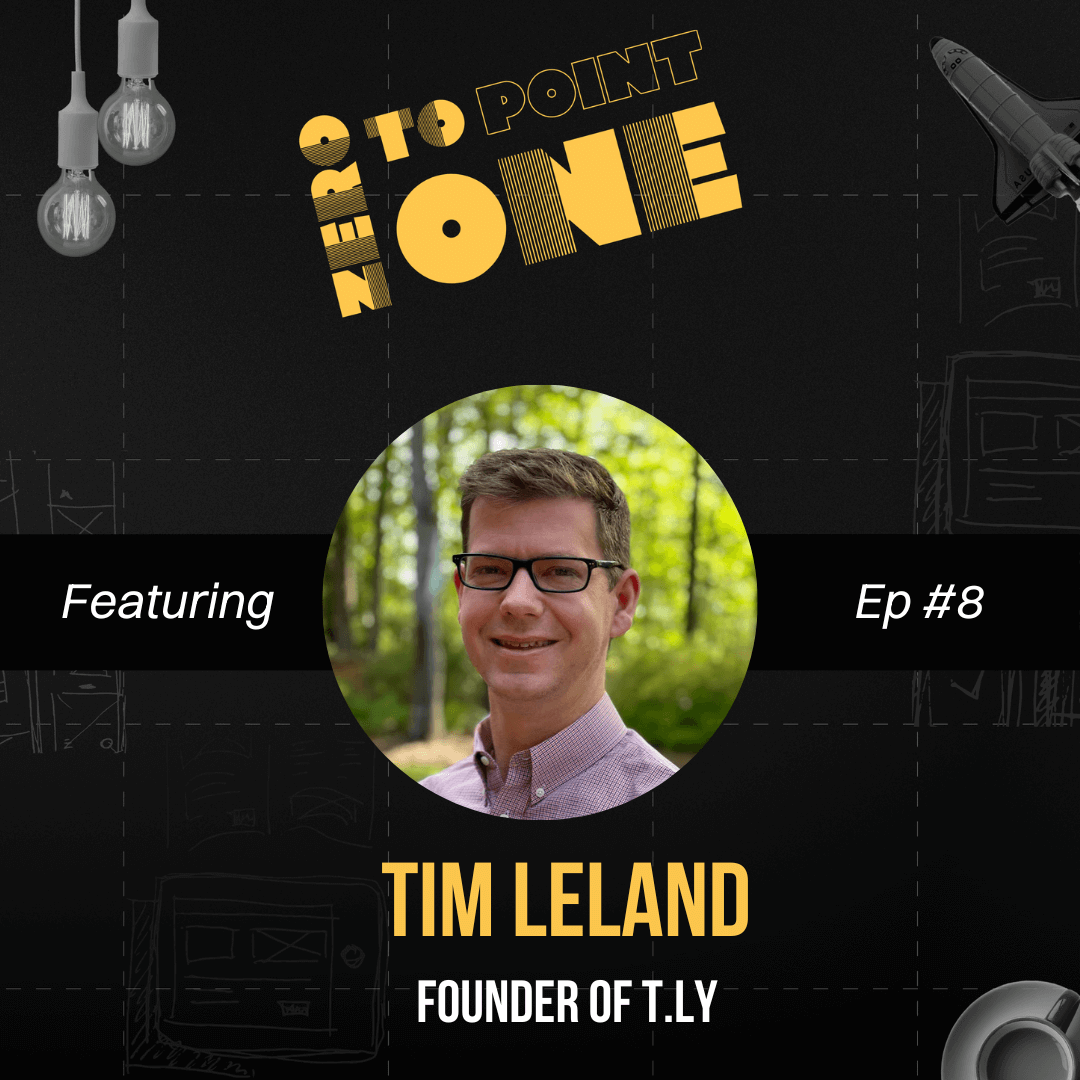
Thanks to Zach Busekrus for having me on his podcast Zero to (point) One. It’s a podcast about the first-time Product Hunt launchers, the Indie Hacker that has yet to go viral on Twitter, or the micro-influencer who wants to build their first niche product. It’s based on Peter Thiel’s Zero to One framework, Zero to (point) One explores the beginnings of (very) early-stage creators and entrepreneurs whose first chapters are still being written. Listen in and hear more about some of my projects, including Atomic Quote, Weather Extension, and most recently T.LY URL Shortener.
In this episode, Zach and I talk about the projects that led to T.LY, why browser extensions became such a useful distribution channel, and how I was thinking about building a better Bitly-style product as an indie founder.
Transcript
Transcript generated from the episode audio and lightly cleaned for readability.
Zach Busekrus: Welcome to the show, Tim. For people just meeting you, how would your friends or family describe what you do?
Tim Leland: They would probably say I am into software, even if they do not totally understand it. I have been a software developer for more than ten years, I studied computer science, and I have worked on a lot of different projects over the years.
Zach Busekrus: Your main project is T.LY, which is a URL shortener. Why build a URL shortener in 2022 when that category feels so old?
Tim Leland: The category has actually been around for a long time. What pushed me into it was Google shutting down its old goo.gl shortener. I had already been building browser extensions, and I saw there was a popular extension using that service. So I built an extension that worked with several other shorteners, and that eventually grew to more than 400,000 users. After that, I wanted something I controlled more directly and could rely on, so I built my own service behind it, which became T.LY.
Zach Busekrus: Did the name line up with your initials on purpose?
Tim Leland: It was mostly just a really good short domain that I could get, but it is funny that it also lines up with my initials. I usually joke that it is just a bit shorter.
Zach Busekrus: Before we go deeper into the products, what were you like as a kid? What kinds of things held your attention?
Tim Leland: I always wanted to be some kind of builder or inventor. Early on I imagined physical products, but software became much more appealing because all you really need is a laptop and an internet connection. It felt like an open-ended way to build tools, products, and eventually businesses.
Zach Busekrus: Were you the kind of person who sat on ideas for a while, or did you jump right in?
Tim Leland: I usually jump right in and start building. Even when I was younger, I was always trying things that looked like little businesses. My brothers and I had a lawn care business, and I remember spending as much time making flyers and trying to get customers as we did actually mowing lawns. I was always interested in building something useful and finding ways to make money from it.
Zach Busekrus: Do you still have a full-time job, or are you already working on your own projects full time?
Tim Leland: I still have a full-time job. These products have mostly been side projects so far, even though some of them have grown into meaningful businesses.
Zach Busekrus: So what is the actual opportunity with T.LY? Is it audience building, analytics, convenience, pricing, or something else?
Tim Leland: The basic pitch was to build a simple, affordable short-link service with the features a lot of people need. When I first started looking closely at the market, some competitors charged a lot for things like custom domains and team features. I felt there was room for a product that handled the core use cases well without enterprise pricing. Google also moved away from a free shortener and toward paid links, which opened up space for smaller builders. I do not need millions of users for that to be a worthwhile business. A smaller number of paying customers can still make it a strong product.
Zach Busekrus: Roughly how many people are paying for it now?
Tim Leland: It is a little over a thousand paying users, and at the time of the interview it had been growing by around ten percent month over month. Because the product is affordable, it is not giant enterprise revenue per customer, but it adds up steadily.
Zach Busekrus: I also looked at your Weather Extension and saw hundreds of thousands of users there too. Why build something as simple and crowded as a weather extension?
Tim Leland: That one came from a very practical need. I wanted to check the weather quickly while I was at my computer without opening a heavy site full of ads. So I built a browser extension that showed the current temperature right in the toolbar and updated in the background. It got picked up by sites like Lifehacker and grew from a small utility into something much bigger. Over time I rewrote it several times, added a paid upgrade, and kept improving it.
Zach Busekrus: It seems like you keep winning in categories that look boring from the outside.
Tim Leland: That is probably fair. A lot of the things I build are boring in the sense that they solve simple, obvious problems. But those can still be really valuable because lots of people need them. Weather matters to everyone. Short links are still useful. If you make a simple tool that solves a common problem well, it can go a long way.
Zach Busekrus: What advice would you give to technical people who want to start building products of their own?
Tim Leland: I keep a running list of ideas and add to it whenever I run into something interesting. Usually the best starting point is a problem you personally care about or experience yourself. If it bothers you, there is a good chance it bothers other people too. I also think audience building matters more than I have taken advantage of myself. If you already have an audience on social media or through a newsletter, it is much easier to launch something. And one of the biggest mindset shifts is making your first dollar online. Once that happens, it opens your eyes to the idea that your work can keep earning after you stop actively working for the day.
Zach Busekrus: Was there a moment where that really clicked for you?
Tim Leland: Yes. I started a blog at timleland.com, and one of my early Raspberry Pi posts got shared by larger sites. I made more than $500 in a week from affiliate links, and that was the first time it really hit me that I could build something once, have people find it around the world, and make money from it while I slept. That is a pretty motivating feeling.
Zach Busekrus: Do you want to go full time on your own projects eventually?
Tim Leland: I would like to, but I also have a wife and three kids, so I approach that more cautiously than someone with fewer responsibilities might. My day job has been valuable too because it has helped me learn how companies operate and how to run parts of my own products more effectively. If my projects keep growing and clearly overtake what I make at work, then going full time becomes a more realistic option.
Zach Busekrus: I spend a lot of time thinking about a Chrome extension for my own Airbnb deal business, but I am not technical. How hard is it to build a browser extension?
Tim Leland: A basic browser extension is mostly JavaScript, HTML, and CSS, so if you know web development fundamentals you can get started pretty quickly. The complexity comes from what the extension is actually doing. For something like your idea, the harder problem is not the extension shell itself. It is the pricing data, tracking, and infrastructure behind it. A good example is CamelCamelCamel for Amazon price tracking. The extension is just one part of a much larger system.
Zach Busekrus: Back to T.LY, where do you see it going over the next six to twelve months?
Tim Leland: I have gone back and forth on the balance between free and paid, but the overall goal is to keep growing the product steadily and make it a service people think of naturally when they think about short links. I want people to try it and feel like it is easier to use, more reliable, and more affordable than the alternatives. A lot of my focus is on awareness and distribution right now, especially SEO. If someone searches for a URL shortener, I want T.LY on the first page consistently.
Zach Busekrus: When did the current version of the product really start?
Tim Leland: The extension started in 2018. Then around the end of 2020 I built the service itself, starting with an API before adding the frontend and paid plans. So I had been working on it for a little over two years by this point, but the previous eight months were when I had really started focusing on growth.
Zach Busekrus: How hard is it to build a link shortener once you get into it?
Tim Leland: The basic shortening and redirect flow is not too hard. The harder parts are everything around it: billing, teams, analytics, smart links, password protection, expiration settings, QR codes, and one-link or link-in-bio style pages. A huge amount of work also goes into abuse prevention. People use shorteners to hide malicious links, so if you want to run a public shortener seriously, you need strong systems to detect and block abuse or the whole service can get burned.
Zach Busekrus: Who actually pays for T.LY today?
Tim Leland: It is a pretty broad mix. I have seen teachers use it for student-facing links, marketers use it for campaigns, people use the QR code tools, and developers build on the API for things like SMS workflows where character count matters. Pretty much anyone who shares links online can find a use for a shortener.
Zach Busekrus: So your near-term focus is less about giant new features and more about growth?
Tim Leland: Exactly. There are still features I could build, especially around the one-link pages, but the product already covers most of what people ask for. The bigger opportunity right now is awareness: SEO, blog posts, backlinks, partnerships, and just getting more people to discover the product.
Zach Busekrus: Before we wrap, tell people about Atomic Quote. What is it and why did you build it?
Tim Leland: Atomic Quote came from reading Atomic Habits and wanting a clean quote website with a good name. The idea was to build a large, easy-to-browse database of popular quotes organized by author and topic, with nice social share cards when someone wants to post a quote online. It was also an SEO experiment for me. I built it quickly, put it out there, and wanted to see whether a content-heavy site like that could start attracting traffic on its own. It is not huge, but it has been doing well and even makes a little money from ads.
Zach Busekrus: For people who want to follow your work, where should they go?
Tim Leland: My blog is timleland.com. If you need a shortener, go to T.LY. And if you are on Twitter, you can find me at @tim_leland. Feel free to reach out if you have questions about Chrome extensions or any of these projects.